Why automated car washes scratch cars in St. Augustine
The tunnel looks cheap until the salt film and sand from A1A get dragged across the clear coat. That’s how St. Augustine cars pick up swirl maps.
· Anastasia Armor · St. Augustine, Florida
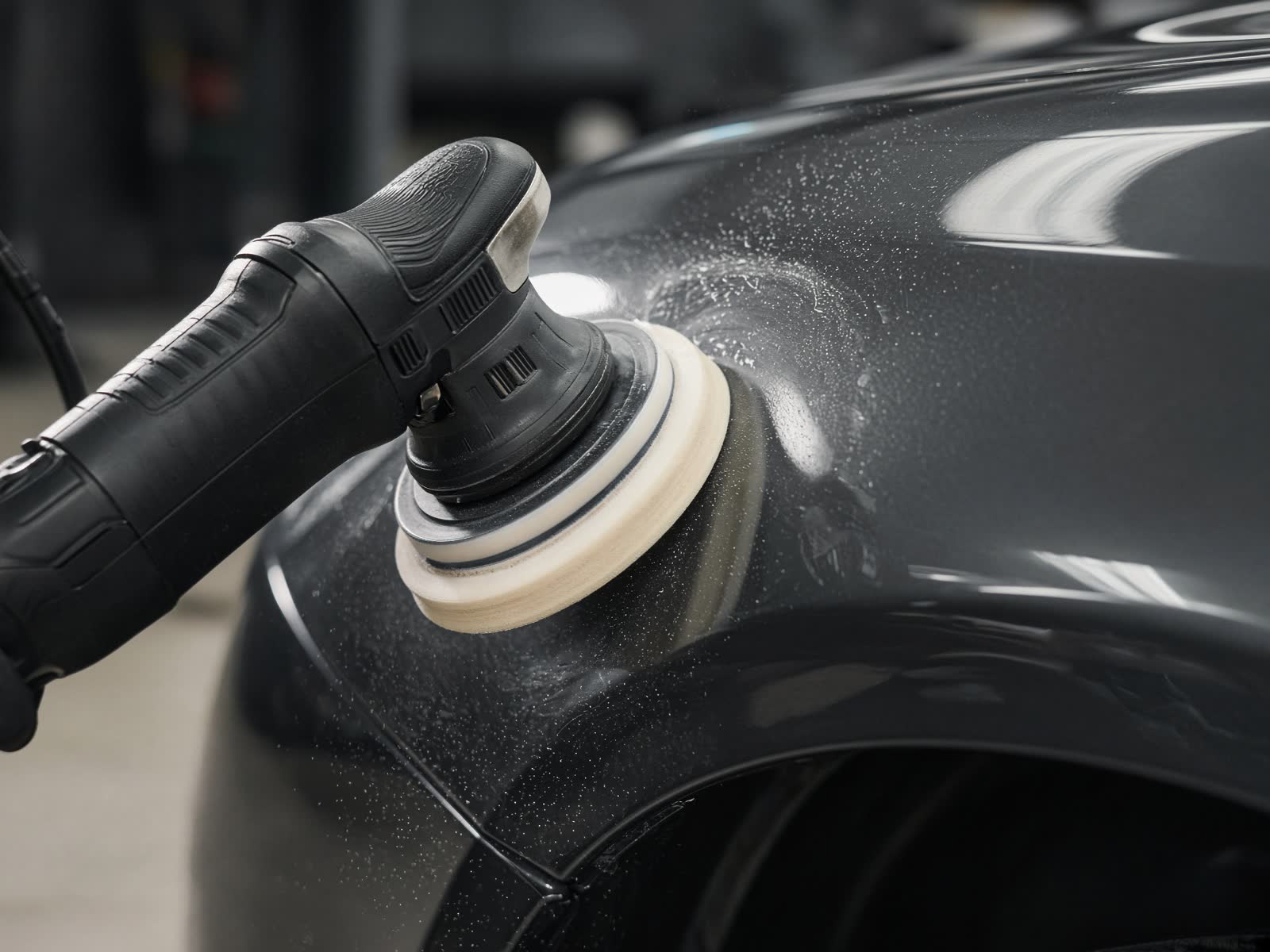
A1A cars pick up salt film, live-oak pollen, and beach sand in the same afternoon. An automated wash does not rinse that off first. Soft-looking brushes and recycled water grab the grit and drag it across the hood. That is how a $12 tunnel becomes a swirl map you only notice in the driveway sun.
What do tunnel brushes do to paint in St. Augustine?
The cloth is not the only problem. The last car through left iron dust, irrigation minerals, and sand in the same bristles. Your clear coat is next. On black and dark blue you see spider-web swirls. On white you see a dull haze that no rinse restores. Salt air makes it worse: damp chloride film plus grit equals micro-scratches that etch if they sit.
Why recycled wash water leaves spots and film
Most tunnels reuse water loaded with minerals. That water hits the salt already on the panel, then the blowers dry it in Florida sun. You leave with irrigation-style water spots on glass and paint — the same spots we correct as an add-on. Hard water plus salt does not rinse clean. It bakes on.
How to wash a car here without the tunnel
Hand wash in the driveway. Fresh water, foam, two-bucket or equivalent, then a hand dry so salt and sand never sit. If the paint already has swirls, a single-stage polish knocks them down before sealant or ceramic goes on. That is the Studio and Atelier work we do on Anastasia Island, Vilano, and St. Augustine Beach cars — no brushes, no recycled rinse.
If the tunnel already left marks, stop feeding it grit. Call or text (904) 201-9156 or email anastasiaarmorauto@gmail.com. We come to the driveway seven days, 7am–7pm.